

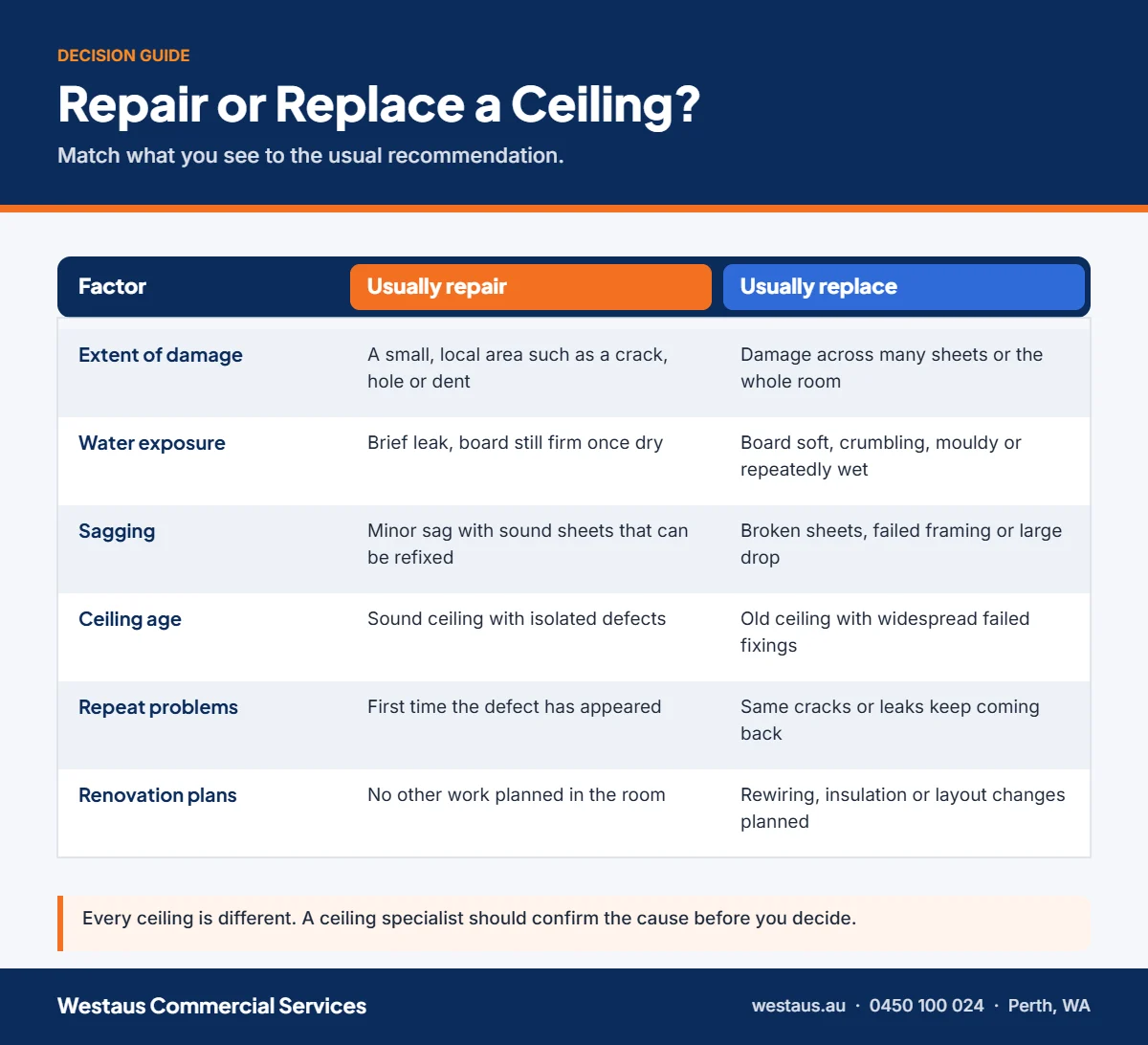
- Repair is usually right for local damage: cracks, holes, dents, brief leaks and minor sagging where the sheets are still sound.
- Replacement makes sense when damage is widespread, the board is soft or broken, the framing has failed, or the same problems keep returning.
- Always fix the cause first. Whether you repair or replace, a ceiling will fail again if the leak or movement continues.
- Replacing a whole room costs more upfront but can be cheaper than repeated repairs on a failing ceiling.
When a ceiling is damaged, the big question is whether to repair or replace it. Repair is quicker and cheaper upfront, but it is only good value if the rest of the ceiling is sound. Replace too early and you spend money you did not need to; repair a ceiling that is past its best and you will be paying again within a year.
This guide gives you a practical way to decide whether to repair or replace, based on what you can see, what caused the damage, and what else is happening in the room.
Table of Contents
Start with the cause, not the damage
Before deciding to repair or replace, find out why the ceiling is damaged. The visible defect is a symptom. The common causes are:
- Water: roof leaks, blocked gutters, plumbing leaks and condensation from fans venting into the roof space.
- Movement: failing fixings or adhesive, timber shrinkage, or structural movement in the house.
- Impact: ladders, furniture, accidents or work in the roof space.
- Age: particularly in older fibrous plaster ceilings, where traditional fixings deteriorate over decades.
WA’s Building and Energy regulator notes in its ceiling collapse guide that moisture, extra loads and roof-space work can all cause sagging and fixing failure. If the cause is not fixed, neither repair nor replacement will last.
6 signs that help you decide whether to repair or replace
1. How much of the ceiling is affected
A crack, a hole or a dent in one area is a repair, and usually a quick job for a plasterer in Perth. If damage covers several sheets, or you see cracks and sagging across most of a room, replacing that ceiling is usually more cost-effective than patching it piece by piece.
2. Whether the board is still firm
Plaster that has been wet briefly and dried out firm can usually be sealed and repaired. Plaster that is soft, crumbling, swollen or mouldy has lost its strength and should be replaced. Press gently near, not on, the damaged area only if it is safe to do so; if in doubt, leave it to a professional.
3. How much it has dropped
A ceiling that has dipped slightly but has sound sheets can often be refixed. A ceiling that has dropped significantly, or where sheets have cracked through, may need replacing. Our guide to ceiling collapse warning signs explains how to measure sag safely.
4. The age and type of ceiling
An older fibrous plaster ceiling with sound sheets can often be restrapped and kept, which preserves original cornices and character. Read our article on fibrous plaster ceilings and restrapping for details. If the fixings throughout the ceiling are failing and the sheets are damaged too, replacement becomes the practical choice.
5. Whether problems keep coming back
The same crack reopening, or a stain reappearing after painting, means the underlying problem has not been solved. At that point it is worth deciding whether to repair or replace properly rather than patching again.
6. What else is planned for the room
If you are rewiring, adding downlights, upgrading insulation or changing the layout, replacing the ceiling at the same time can be efficient. The ceiling is open, so the other work is easier, and you finish with a new, flat surface.
Repair or replace: comparing the options
| Repair | Replace | |
|---|---|---|
| Best for | Local cracks, holes, minor water marks, small sags | Widespread damage, soft or broken board, failed framing |
| Time | Often hours to a couple of days, plus drying and painting | Usually one or more days per room, plus finishing and painting |
| Disruption | Low; usually one room at a time | Higher; room cleared and protected, more dust |
| Upfront cost | Lower | Higher |
| Long-term value | Good if the ceiling is otherwise sound | Good when the existing ceiling is failing |
What it costs to repair or replace a ceiling in Perth
According to the independent What’s The Damage Perth cost guide (October 2026), a small hole patch in Perth is typically $160 to $295, water damage repairs typically run $315 to $1,575, and replacing a single room ceiling of 12 to 16 m² is typically $840 to $3,150. Our ceiling repair cost guide explains the factors behind those numbers.
When you compare the cost to repair or replace, include the likely future cost too. Three repairs over two years on a failing ceiling can easily cost more than one replacement.
What a ceiling replacement involves
- Protect floors and furniture, and isolate power to lights and fans in the room.
- Remove the damaged ceiling sheets and cornices safely, and dispose of them.
- Inspect and repair the framing, battens and insulation above.
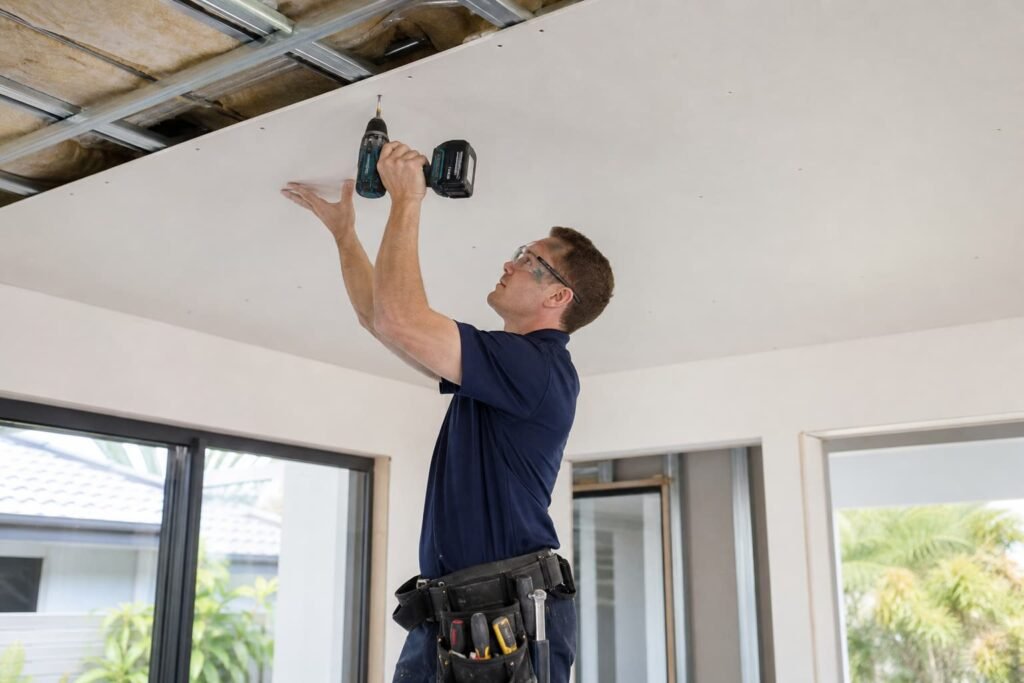
- Install new plasterboard with the correct screws and adhesive for the span.
- Set joints, fit new cornices and finish the surface ready for paint.
- Refit lights and fans with a licensed electrician, then paint.
For more detail, see our ceiling replacement and ceiling installation pages.
What a ceiling repair involves
A typical repair starts by securing any loose sheets and cutting back damaged material. New plasterboard is fitted where needed, joints are taped and set, and the area is finished in several coats so it blends with the surrounding ceiling. It is then sealed and painted. See ceiling repairs in Perth for the process.
Questions to ask your ceiling contractor
- What do you think caused the damage, and how will it be fixed?
- Why do you recommend that I repair or replace in this case?
- Which sheets, cornices and framing are included in the price?
- Is painting included, and for the whole ceiling or just the repair?
- How long will the room be out of use?
A clear, written answer to each question gives you confidence in whichever option you choose.
Partial replacement: the middle option
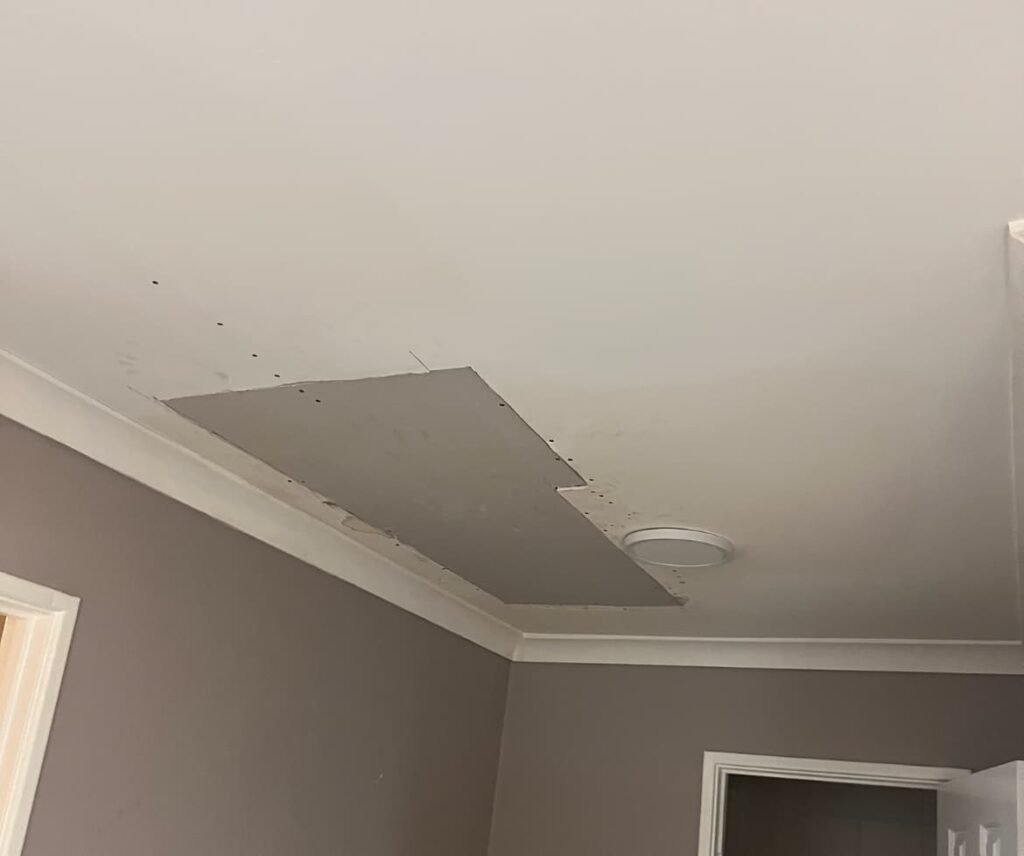
The choice to repair or replace is not always all or nothing. Partial replacement removes only the damaged sheets and joins new plasterboard to the sound ceiling around it. It is common after a leak that affects one corner of a room, or where a few sheets have dropped but the rest of the ceiling is secure.
Partial replacement works well when the remaining ceiling is flat and firmly fixed, the new section can be supported on existing framing, and the join can be finished and painted so it blends in. It is less suitable when the surrounding ceiling is also failing, because you end up with a new section attached to an old problem.
- Good candidate: a stain and soft patch from a single roof leak, now fixed, in an otherwise sound ceiling.
- Good candidate: two or three sheets dropped from poor adhesive, with the rest tested and secure.
- Poor candidate: an older ceiling with cracks and sagging throughout, where most fixings are failing.
Ask your contractor to explain where the joins will be and how the finish will be matched. A full repaint of the ceiling after partial replacement usually gives the most even result.
Repair or replace in rentals and commercial buildings
For landlords, property managers and commercial owners, the decision to repair or replace also involves downtime, tenants and liability. A quick repair keeps a room in use, but repeated call-outs to the same ceiling cost time and goodwill. A planned replacement during a vacancy or a scheduled shutdown can be the more practical choice.
In offices, shops and strata buildings, ceilings often carry lights, sprinklers, data cabling and air-conditioning outlets. Any replacement needs coordination with the relevant licensed trades. Planning ceiling work alongside other maintenance, such as roof repairs or commercial painting, reduces access costs and disruption.
Tip: Keep a simple log of ceiling repairs for each property: date, location, cause and cost. It makes the next repair or replace decision much easier.
Frequently asked questions
Is it cheaper to repair or replace a ceiling?
Repair is cheaper upfront for small, local damage. Replacement can be better value when damage is widespread or keeps recurring, because repeated repairs add up.
Can a water-damaged ceiling be repaired?
Yes, if the leak is fixed and the board is still firm once dry. Soft, crumbling or mouldy plaster should be replaced.
How do I know if my ceiling needs replacing?
Signs include widespread cracking, soft or broken sheets, significant sagging, failed framing, or the same problems returning after previous repairs.
Can I replace just part of a ceiling?
Often, yes. Damaged sections can be replaced and joined to the existing ceiling, then finished and painted so the repair blends in.
How long does ceiling replacement take?
A single room often takes one to two days of installation, plus time for joint finishing, drying and painting.
Not sure whether to repair or replace?
Send us photos and a quick description of the damage. We will explain which option makes sense and give you a clear written scope.