
- Many older Perth homes have a fibrous plaster ceiling, cast in sheets and traditionally held up by plaster wads or ties around the timber above.
- With age, those fixings dry out, crack or lose grip, and the ceiling begins to sag, crack or pull away from the cornice.
- Restrapping secures the existing sheets back to sound framing from above, then the cracks below are repaired and painted.
- If sheets are broken, water-damaged or the framing has failed, partial or full replacement may be the better option.
If you live in an older Perth home, there is a good chance your ceilings are fibrous plaster rather than modern plasterboard. A fibrous plaster ceiling can last a very long time, and many still look excellent after decades. But the way these ceilings are fixed means they age differently, and when they start to fail, the signs are easy to miss until a section drops.
This guide explains how a fibrous plaster ceiling is put together, why it fails over time, what restrapping actually involves, and how to decide between repair and replacement.
Table of Contents
What is a fibrous plaster ceiling?
Fibrous plaster is plaster reinforced with fibre and cast into sheets, panels and decorative shapes. Because it is moulded, a fibrous plaster ceiling often comes with matching cornices, ceiling roses and patterned panels that give older homes their character. The sheets are lighter and thinner than solid plaster but strong once properly fixed.
Modern Perth homes are mostly lined with gypsum plasterboard, which is screwed and glued to battens or joists. Older homes, particularly those from the mid-twentieth century, are more likely to have fibrous plaster sheets fixed with traditional methods. Some homes have a mix, where rooms have been relined or extended over the years, so it is worth having a plasterer in Perth confirm what you have before any work starts.
How to tell what your ceiling is
- Age of the home: older homes are more likely to have fibrous plaster.
- Joints and panels: fibrous plaster ceilings often show panel joints, sometimes with decorative battens or patterns.
- Ornate cornices and roses: moulded details are common with fibrous plaster.
- From above: in the roof space, fibrous plaster sheets typically have fibre wads or ties wrapped around the timber, whereas plasterboard is fixed with screws and adhesive. Leave roof-space checks to a professional.
How a fibrous plaster ceiling is held up
The key difference is the fixing. Traditionally, a fibrous plaster ceiling was secured with wads: strips of fibre soaked in plaster, wrapped around the ceiling joists or battens above and bonded to the back of the sheet. When the plaster sets, the wad becomes a strong tie. Other methods include wire ties and nails, depending on the era and installer.
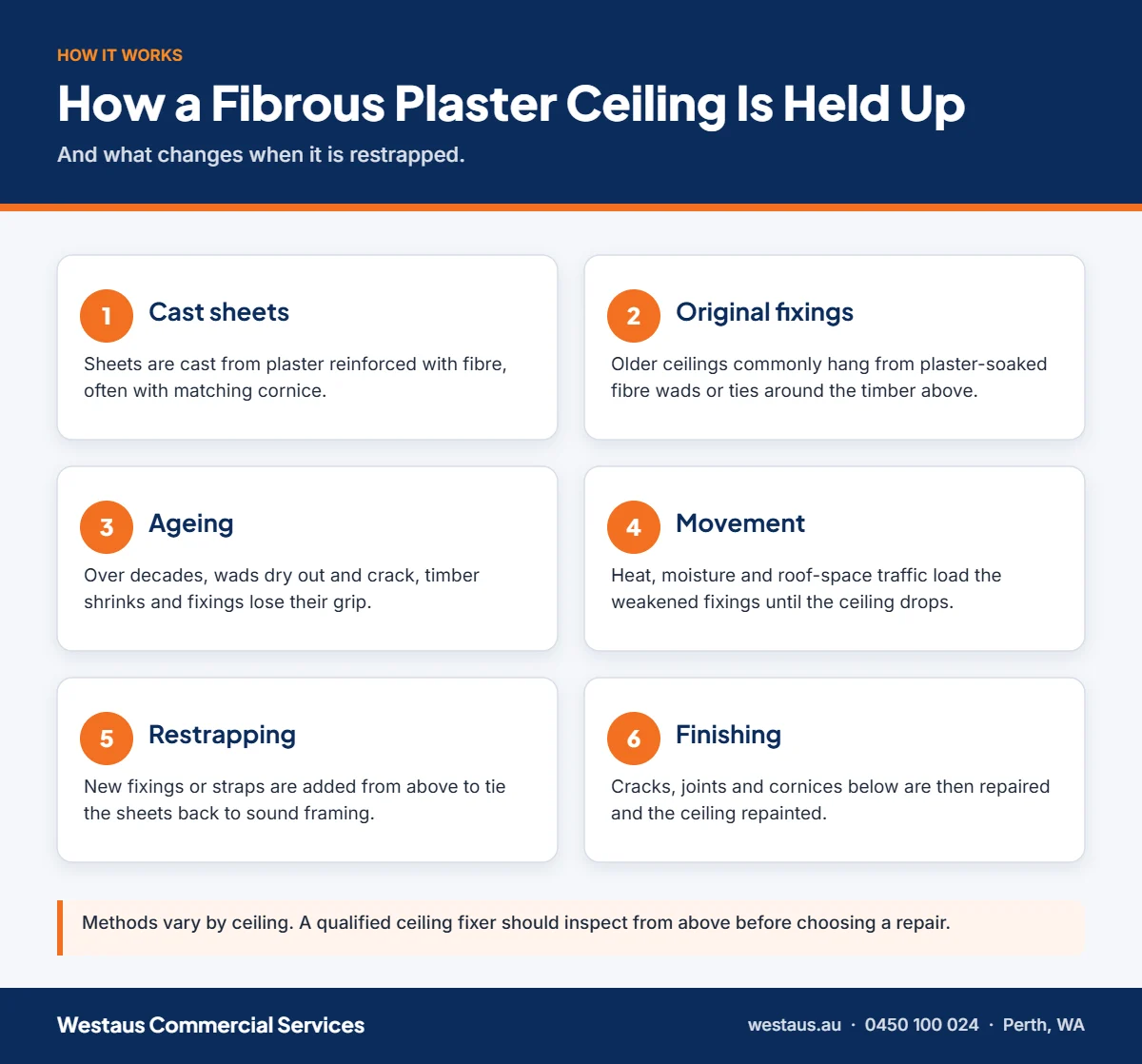
This system works well for many years. The problem is that every wad is a small piece of plaster under constant tension, in a roof space that heats up to extreme temperatures in Perth summers and cools at night.
5 reasons a fibrous plaster ceiling fails
1. Ageing wads and ties
After decades of heating and cooling, plaster wads can dry out, become brittle and crack. Wire ties can corrode. Each failed fixing shifts load to its neighbours until a section can no longer hold.
2. Timber shrinkage and movement
Roof timbers dry and move over time. As they shrink or twist, the bond between wad and timber can loosen. Older homes may also have had roof changes that altered how loads are carried.
3. Moisture
Water weakens plaster quickly. A leaking roof, blocked gutter or bathroom fan venting into the roof space can soften wads and sheets. WA’s Building and Energy regulator lists moisture entering the roof space as a key cause of ceiling sagging in its guide to ceiling collapse.
4. Loads and roof-space traffic
Boxes stored on the ceiling, heavy insulation, ducted air-conditioning work, and tradespeople walking in the roof space all add strain. A knee or foot on the back of a fibrous plaster ceiling can crack wads that were already weak.
5. Previous poor repairs
Screwing through the face of a sagging sheet without addressing the fixings above, or filling cracks without securing the ceiling, can hide the problem for a while. When the ceiling keeps moving, the cracks return.
Warning signs your fibrous plaster ceiling is failing
The signs are similar to those for any ceiling, but with fibrous plaster they often appear gradually over months:
- A gap opening between the cornice and the ceiling or wall.
- Cracks along panel joints, especially long straight ones.
- A visible dip or bow, best seen by looking along the ceiling towards a window.
- Cracking or popping sounds from the ceiling, often at night.
- Fine plaster dust or debris on furniture below one spot.
If you notice these, read our full guide to ceiling collapse warning signs, keep people out of the room, and do not push on the ceiling to test it.
What restrapping actually involves
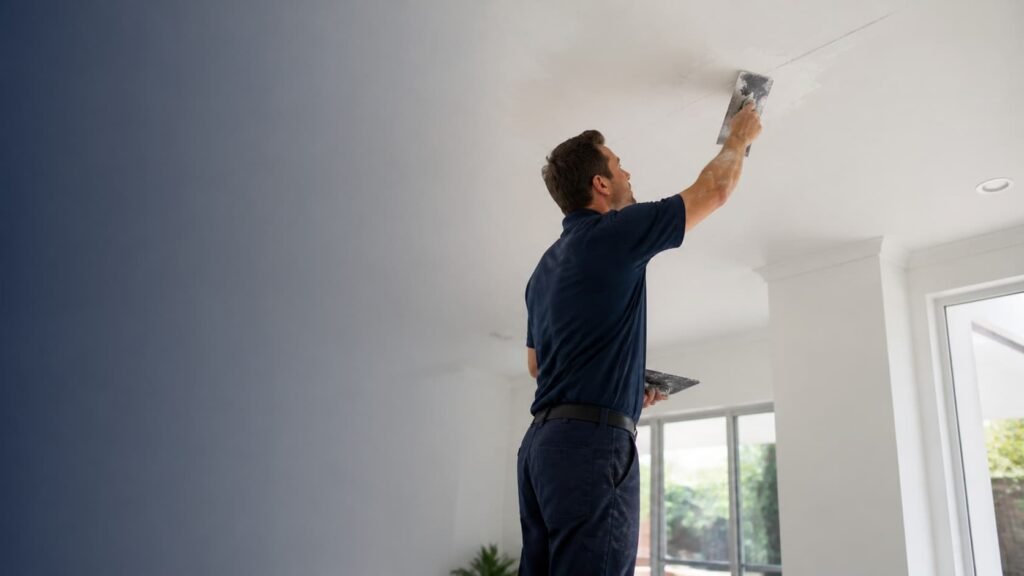
Restrapping, sometimes called refixing or re-securing, means adding new fixings from above to tie the existing fibrous plaster ceiling back to sound framing. The goal is to restore support without removing the sheets. The exact method depends on the ceiling, but a typical job follows these steps:
- Inspection from above and below to check the fixings, sheets, timber, moisture and any previous repairs.
- Temporary support such as props or bracing if a section is dropping.
- Clearing the work area in the roof space, which may mean moving insulation and checking electrical cables with care.
- Lifting the ceiling back gently into position where the sheets are sound enough to move.
- Installing new fixings such as new plaster wads, straps or approved mechanical fixings into sound timber.
- Repairing the face below by filling cracks, re-setting joints and repairing cornices, then repainting.
Safety first. Roof spaces in Perth get extremely hot, contain electrical cables and have no floor. Restrapping should be done by an experienced ceiling fixer, with power isolated where needed.
Will restrapping make the ceiling look new?
Restrapping secures the ceiling. The cracks and joints below still need patching and repainting, and a small amount of unevenness may remain in very old ceilings. Most homeowners find the result looks clean and sound once painted. Our ceiling repairs in Perth page explains how that finishing work is done.
Restrap, repair or replace?
Not every fibrous plaster ceiling can or should be saved. Here is how the options usually compare:
| Situation | Usual recommendation |
|---|---|
| Sheets sound, fixings failing | Restrap and repair the face below |
| Small area broken or water-damaged | Replace damaged sections and restrap the rest |
| Widespread water damage or broken sheets | Replace the ceiling in that room |
| Decorative heritage ceiling worth keeping | Restrap and restore, matching cornices and details |
| Framing damaged or undersized | Repair framing, then restrap or replace |
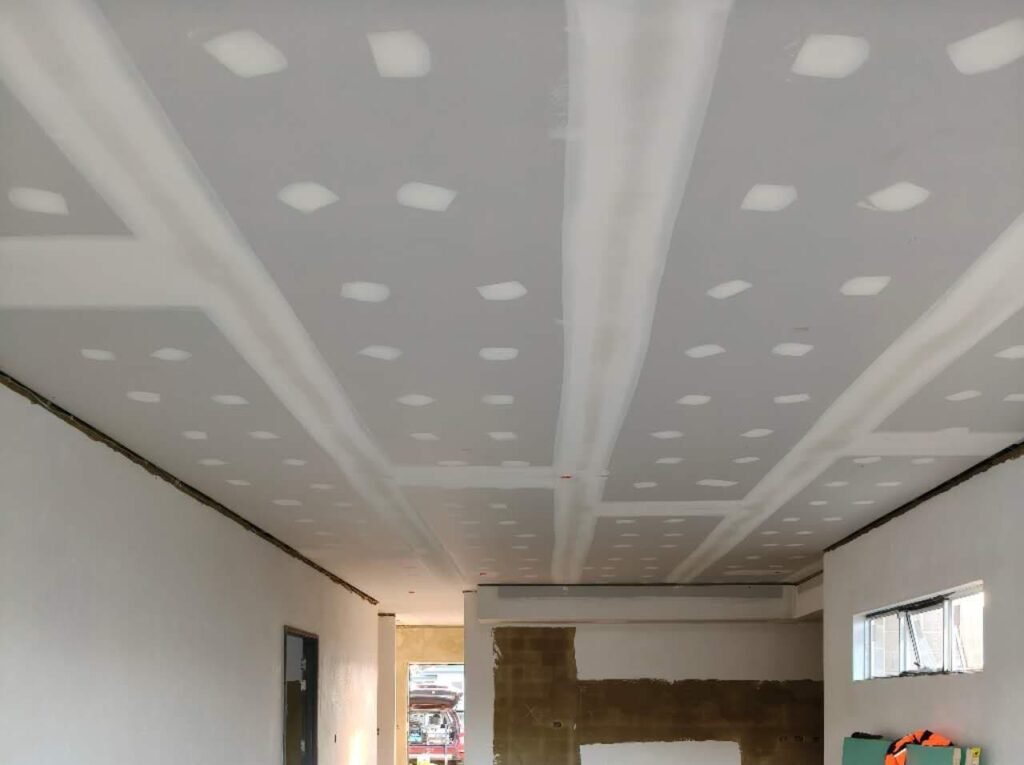
Replacing a fibrous plaster ceiling with modern plasterboard is common when the existing sheets are too damaged. Decorative cornices can usually be matched or replaced with similar profiles. See ceiling replacement in Perth for what is involved, and our ceiling repair cost guide for typical prices.
Check for asbestos before work starts
Older Perth homes, particularly those built before 1990, can contain asbestos in some building products, including wet-area linings, eaves and some textured coatings. WA Health recommends having suspect materials identified before they are disturbed. If there is any doubt about the materials in or around your fibrous plaster ceiling, arrange testing through a NATA-accredited laboratory before restrapping or replacement.
How to look after a fibrous plaster ceiling
- Do not store boxes or heavy items on the ceiling.
- Fix roof leaks and gutter overflows promptly.
- Make sure exhaust fans vent outside, not into the roof space.
- Ask trades working in the roof to walk on joists only.
- Check the cornice line and ceiling for new cracks once or twice a year.
Frequently asked questions
Can a sagging fibrous plaster ceiling be repaired?
Often, yes. If the sheets are sound, the ceiling can usually be restrapped from above and the cracks repaired below. Broken or water-damaged sections may need replacing.
What is ceiling restrapping?
Restrapping is adding new fixings from above, such as plaster wads or straps, to tie an existing ceiling back to sound framing. It restores support without removing the sheets.
How do I know if my ceiling is fibrous plaster?
Older homes, panel joints and moulded cornices are clues. The surest way is an inspection from the roof space, where fibrous plaster usually shows wads or ties around the timber.
Is fibrous plaster better than plasterboard?
Both work well when correctly installed. Fibrous plaster suits decorative and heritage work, while plasterboard is the standard for most new ceilings and replacements.
How long does restrapping take?
A single room is often completed in a day or two, plus time for crack repairs, drying and painting. Larger or heritage ceilings take longer.
Worried about an older ceiling?
Send us photos of the cracks or sagging and your suburb. We will advise whether restrapping, repair or replacement makes sense for your fibrous plaster ceiling.