
- Ceiling collapse is usually preceded by visible or audible warnings: cracking sounds, sagging, nail pops, cornice gaps, cracks, stains or falling dust.
- A height difference of 12 mm or more between the wall edge and the centre of a room may mean the sheeting is detaching.
- Moisture, extra weight in the roof space and poor original fixing are the most common causes.
- If you see a warning sign, clear the room, do not push on the ceiling and have it braced and assessed quickly.
A ceiling collapse can feel like it comes out of nowhere, but it rarely does. In most cases the ceiling has been sending signals for weeks or months: a crack that keeps growing, a cornice that has started to separate, or a sharp popping sound at night that nobody could explain. This guide explains what those signals mean, why ceilings fail in Perth homes, and what to do the moment you notice one.
Whether you own your home, manage a rental or look after a commercial building, knowing these signs gives you time to act while the fix is still simple and affordable.
Table of Contents
Why ceiling collapse happens in Perth homes
A ceiling is a thin sheet of plaster held up by fixings, adhesive and framing. It is designed to carry its own weight and little else. When any part of that system weakens, gravity does the rest. WA’s Building and Energy regulator lists the usual culprits in its homeowner guide to spontaneous ceiling collapse: moisture getting into the roof space, exhaust fans or air-conditioning ducts leaking into the ceiling cavity, extra loads stored on top of the ceiling, and heavy movement when people work in the roof space.
Plasterboard ceilings and poor adhesive
Modern plasterboard ceilings rely on a combination of screws and adhesive daubs. The regulator found that poorly applied adhesive was a common factor in unexplained failures, and it singles out homes completed between 2005 and 2009 as a group where collapses have been reported. If your home was built in that window, a quick inspection is worthwhile even if nothing looks wrong.
Older homes with fibrous plaster
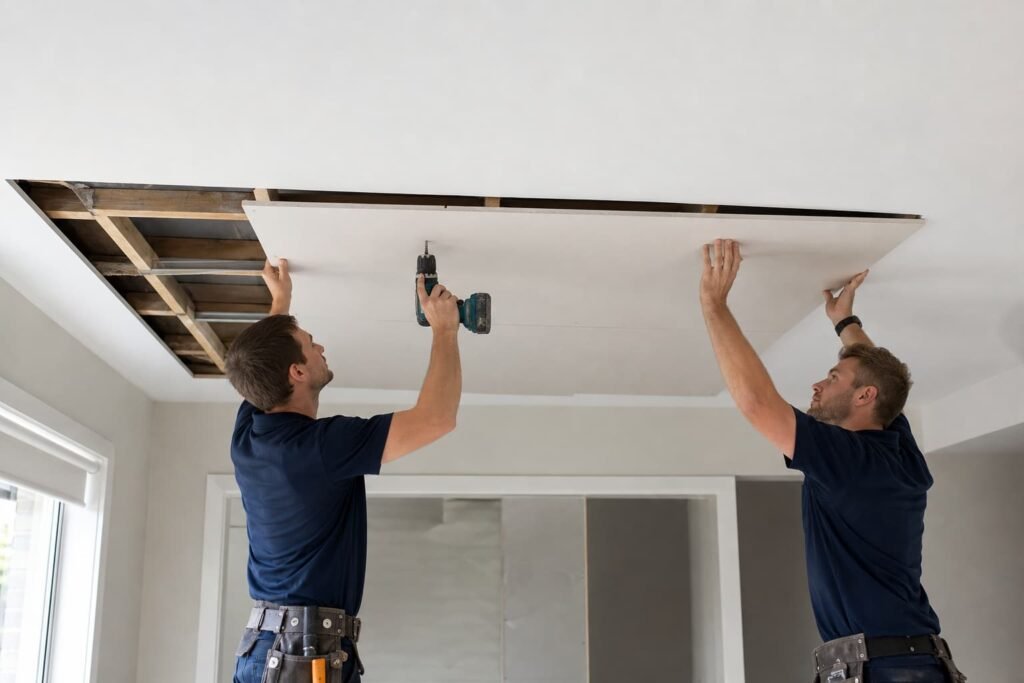
Many older Perth homes have fibrous plaster ceilings held up by plaster “wads” or ties fixed to the timber above. Over decades those fixings can dry out, crack or rust, and the ceiling can start to drop. These ceilings can often be secured again, but the work needs someone who understands the original construction. Our guide to sagging ceiling repairs in Perth explains the options.
Moisture, heat and extra weight
Water is the biggest enemy of plaster. A leaking roof, a blocked gutter or a bathroom fan venting into the ceiling cavity can soften the board until it can no longer hold a fixing. Perth’s hot summers add to the stress as framing expands and contracts. Boxes, spare tiles or old insulation stored above the ceiling add weight the ceiling was never designed to carry.
7 ceiling collapse warning signs to look out for
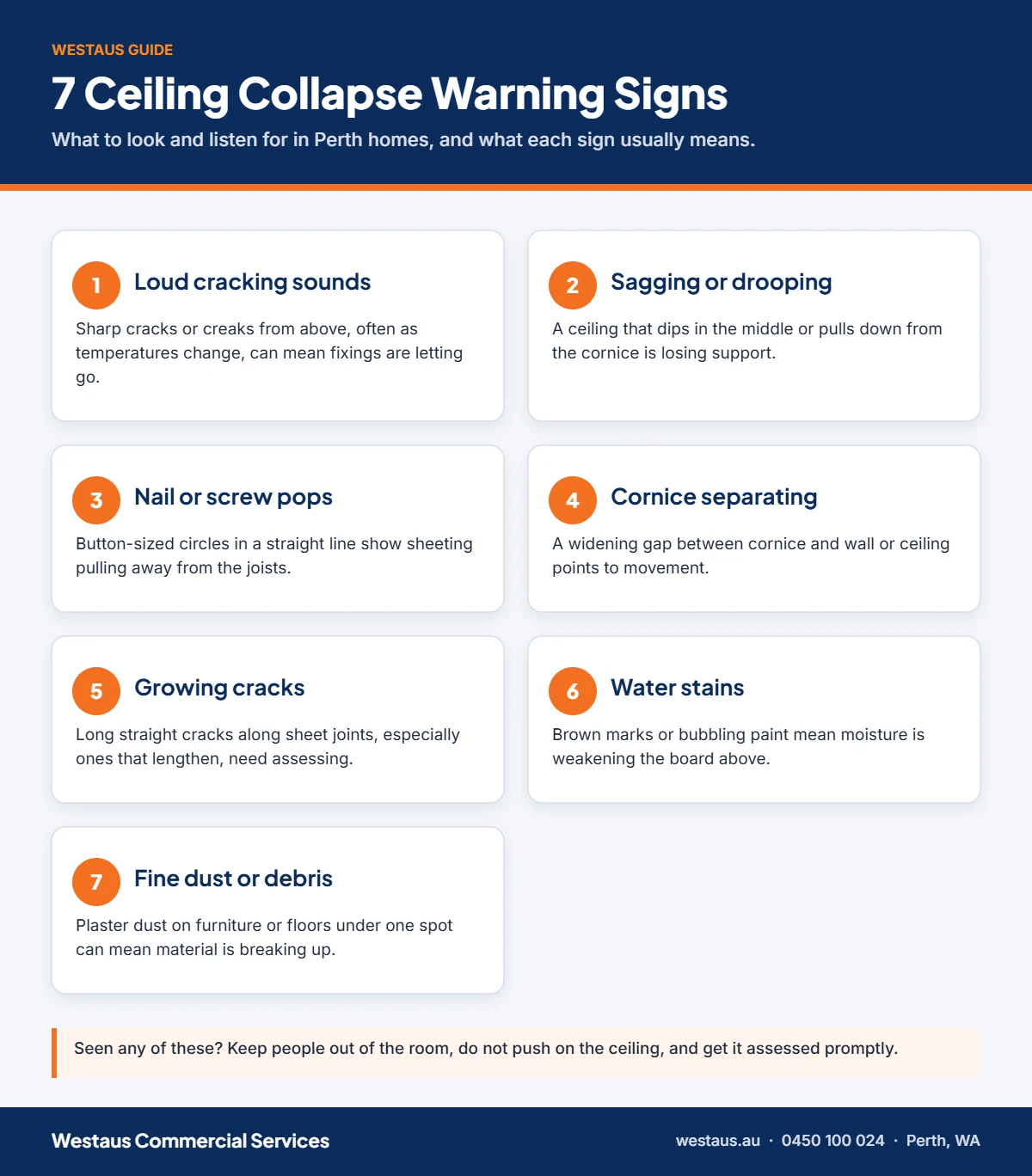
Consumer Protection WA reported that residents in homes with collapsed ceilings had noticed warning signs beforehand but thought they were minor. The infographic below sums up the seven signs that deserve attention.
1. Loud cracking or popping sounds
A sharp crack from the ceiling, especially at night as the house cools, is one of the most commonly reported warnings. It can mean adhesive or fixings are breaking away. One sound on its own is not proof of an imminent ceiling collapse, but repeated sounds from the same area should be checked.
2. Sagging or drooping
Stand at the edge of the room and look across the ceiling towards a window. A ceiling that dips in the middle, or pulls down away from the cornice, has lost support. Sagging is the clearest sign that a ceiling collapse risk is building.
3. Nail or screw pops in a straight line
Small circular bumps about the size of a button, lined up across the ceiling, show where the sheeting is pulling away from the joists. A single pop is common in new homes; a line of them is not.
4. Cornice separating from the wall or ceiling
A hairline gap at the cornice is often just paint movement. A gap that is getting wider, or one where the ceiling side is dropping, means the sheet is moving.
5. Cracks that keep growing
Long, straight cracks along sheet joints are a sign that sheets are moving independently. Mark the ends of the crack with a pencil and the date. If it grows, it needs assessing.
6. Water stains and bubbling paint
Brown rings, bubbling paint or a soft spot mean water has reached the plaster. Wet plaster loses strength quickly. Read our page on water-damaged ceiling repairs for what happens next.
7. Fine dust or small pieces falling
Plaster dust collecting on furniture or the floor under the same spot, or small flakes dropping from a crack, can mean the material is breaking up. Treat this as urgent, because it often comes shortly before a ceiling collapse.
The 12 mm check: a simple way to measure sag
The WA guide suggests a practical test you can do from the floor. Measure the ceiling height close to a wall, then measure it again near the centre of the room. A difference of 12 mm or more may indicate the sheeting is detaching from the framing.
- Use a tape measure or laser measure from the floor to the ceiling about 300 mm in from a wall.
- Measure again at the centre of the room, under the lowest point you can see.
- Compare the two numbers. A difference of 12 mm or more is a reason to call a ceiling specialist.
- You can also hold a long straightedge or spirit level against the ceiling to spot uneven areas.
Stay out of the roof space. Checking for gaps between the sheeting and the joists means going into the ceiling cavity, which is hazardous. Leave that to a qualified person, with the power isolated first.
What to do if you notice a warning sign
If you notice one or more signs, act quickly but calmly. Most ceilings that are caught before a ceiling collapse can be secured and repaired without full replacement.
- Clear the area. Move people, pets and valuables out of the room and keep the door closed.
- Do not push or prod the ceiling. Pressing on a loose sheet can bring it down.
- Watch for water and electrics. If water is near light fittings, switch off the circuit at the switchboard and call a licensed electrician.
- Take photos. Record the cracks, stains and sag from a safe distance. They help with quotes, insurance and builder claims.
- Get it braced and assessed. A ceiling specialist can install temporary props, find the cause and recommend a repair.
Who is responsible for fixing it?
Homeowners and builders
Ceilings should be built to last the life of the building. If your home is less than six years old and you believe the problem comes from how it was built, the regulator advises giving your builder written notice first and, if it is not resolved, lodging a complaint with Building and Energy. For older homes, disputes are handled through the courts, so independent advice is worth getting.
Landlords and property managers
For rentals, a ceiling collapse can mean injured tenants, damaged belongings and the cost of alternative accommodation. Consumer Protection WA urges landlords and property managers to act on warning signs and to include a quick ceiling check in routine inspections, noting that repairing a ceiling costs less than dealing with the results when it fails.
How a failing ceiling is repaired
After a near miss or a partial ceiling collapse, the right repair depends on the cause and the condition of the sheets. A specialist will usually brace the ceiling first, then decide between:
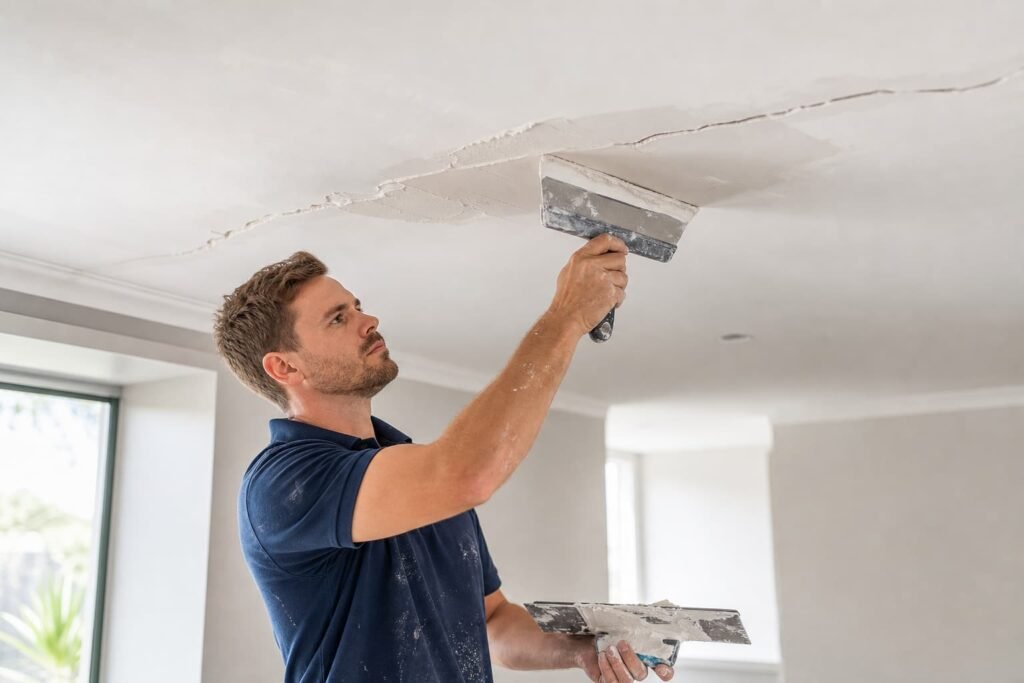
- Refixing and securing sound sheets with new fixings and adhesive, then patching and finishing.
- Restrapping or re-securing older fibrous plaster ceilings at their original attachment points.
- Partial replacement of sheets damaged by water or broken during the drop.
- Full replacement when the lining is widely damaged or the framing needs work. See ceiling replacement in Perth.
Whatever the method, fixing the cause matters as much as fixing the ceiling. A roof leak or blocked gutter needs attention first, which is why ceiling and roofing work are often planned together.
How to prevent ceiling collapse
Most ceiling collapse cases trace back to a handful of causes that are easy to manage with simple maintenance:
- Do not store heavy items on top of the ceiling unless extra framing has been installed.
- Fix roof leaks and replace water-damaged plasterboard or insulation promptly.
- Check that bathroom and laundry exhaust fans vent outside, not into the ceiling cavity.
- Ask your air-conditioning technician to check ducts for tears and loose joints.
- Make sure anyone working in the roof space walks on joists and avoids bumping the ceiling sheets.
- Look up during routine cleaning or rental inspections and note any change.
Frequently asked questions
Can a ceiling collapse without warning?
It can happen suddenly, but most ceilings show warning signs first, such as cracking sounds, sagging, nail pops or growing cracks. Residents often notice these and dismiss them as minor.
Is a small crack in the ceiling a sign of ceiling collapse?
Not always. Hairline cracks are common as homes settle. A crack is more concerning if it is long and straight along a sheet joint, keeps growing, or appears with sagging or popping sounds.
How much sag is too much?
WA guidance suggests that a difference of 12 mm or more between the ceiling height near the wall and at the centre of the room may mean the sheeting is detaching. Have it assessed if you measure that much.
Can a sagging ceiling be fixed without replacing it?
Often, yes. If the sheets are in good condition, they can usually be braced, refixed and finished. Replacement is needed when the plaster is broken, water-damaged or the framing has failed.
Who pays for a collapsed ceiling in a rental?
Landlords are generally responsible for keeping the property in a reasonable state of repair. If the damage was caused by the tenant, that can change. Check your lease and contact Consumer Protection WA if you are unsure.
Worried about your ceiling?
Send us a few photos and your suburb. We will tell you whether it looks urgent and arrange an inspection across the Perth metro area.